
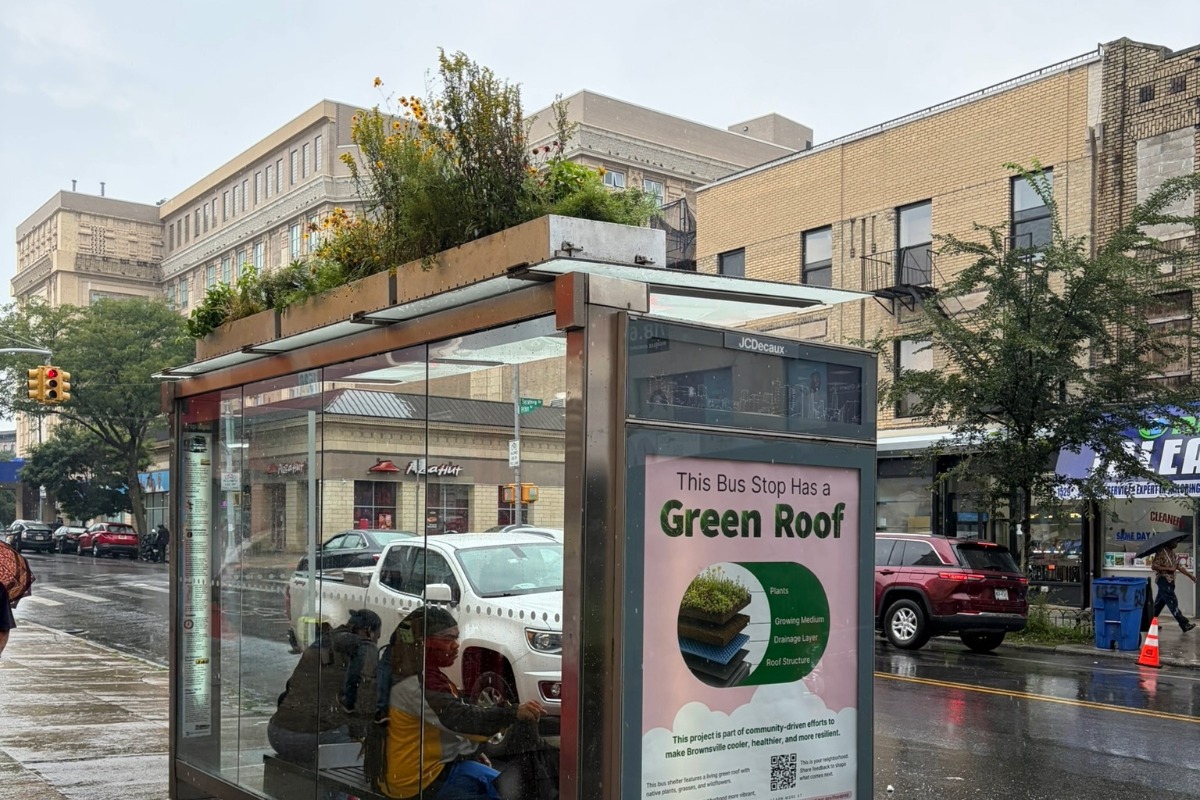
Brooklyn is now home to New York City’s first green roof bus shelter, transforming everyday public transportation infrastructure into an opportunity to reduce extreme heat, manage rainfall, and create more welcoming public spaces.
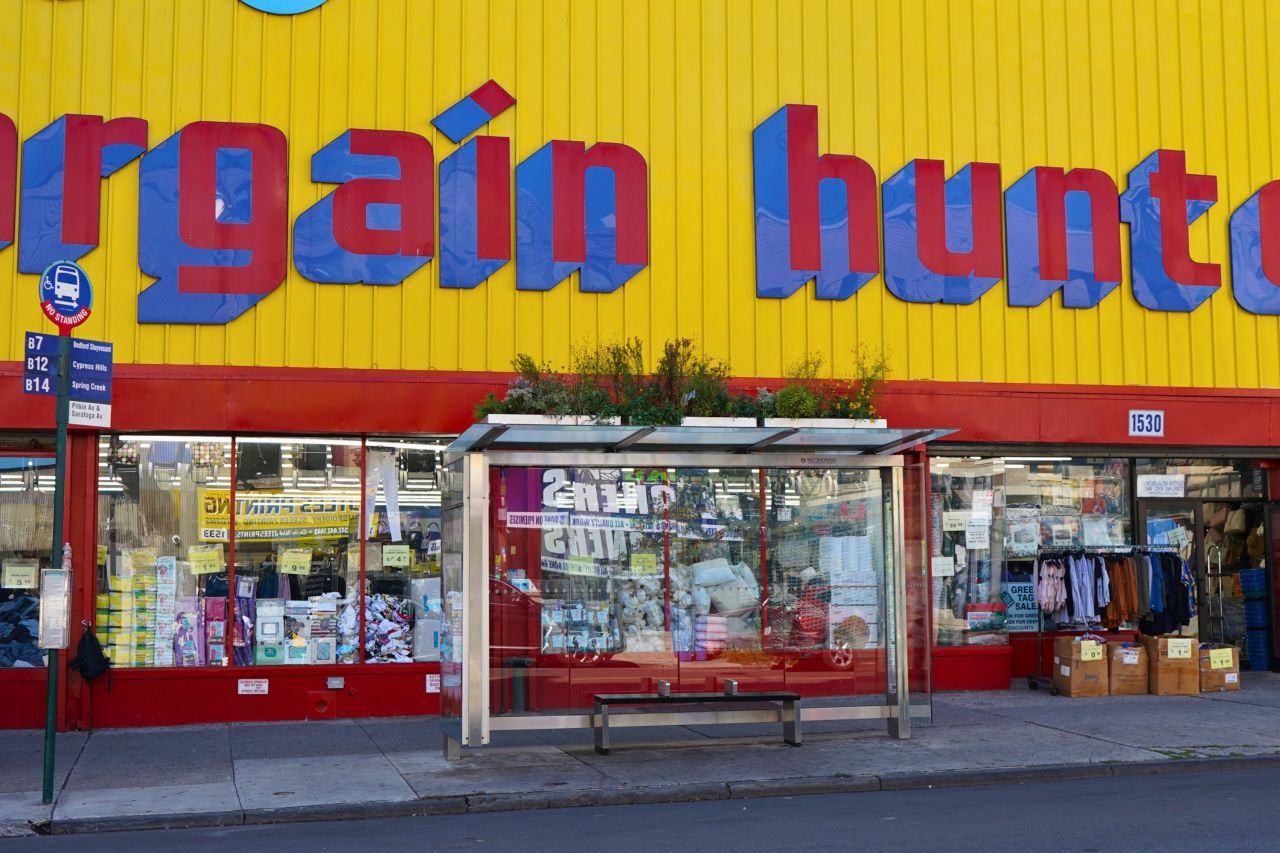
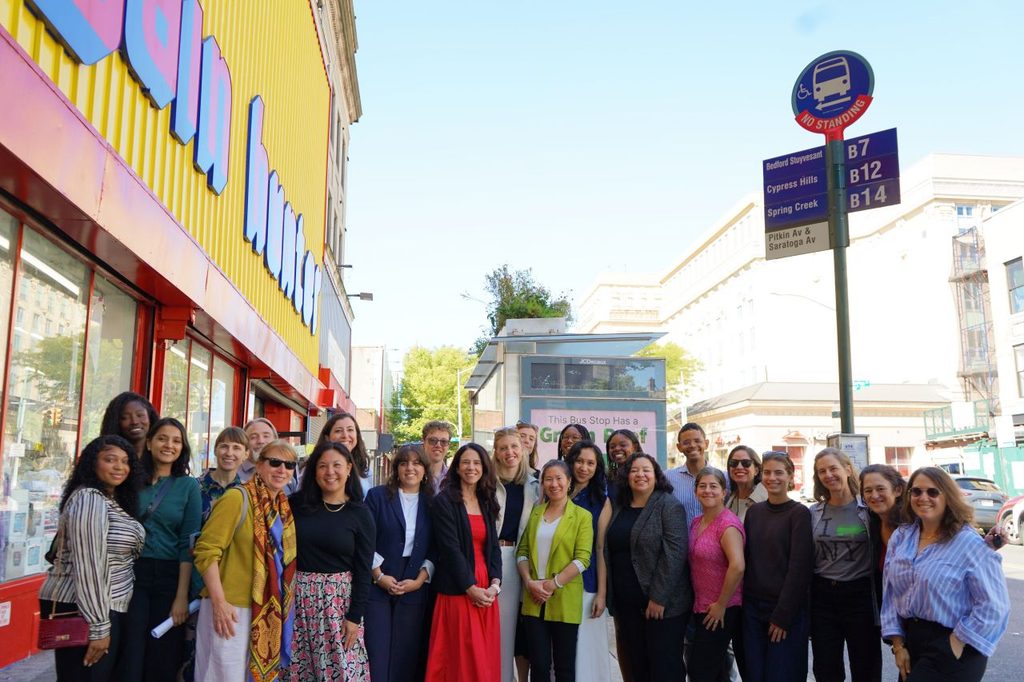
On September 16, 2026, Mayor Zohran Mamdani and Chief Climate Officer Louise Yeung announced the installation of four innovative bus shelter roofs along Pitkin Avenue in Brownsville, Brooklyn. The pilot includes the city’s first green roof bus shelter and three additional shelters equipped with sunlight-reflecting film, testing practical and potentially scalable approaches to improving the comfort of bus riders while addressing the impacts of climate change.
Resilient Cities Catalyst (RCC) helped lead this community-driven initiative in partnership with the NYC Mayor’s Office of Climate & Environmental Justice (MOCEJ), New York City Department of Transportation (NYC DOT), Pitkin Avenue Business Improvement District (BID), JCDecaux, Future Green Studio, and New York Green Roofs.
Turning everyday infrastructure into climate resilience solutions
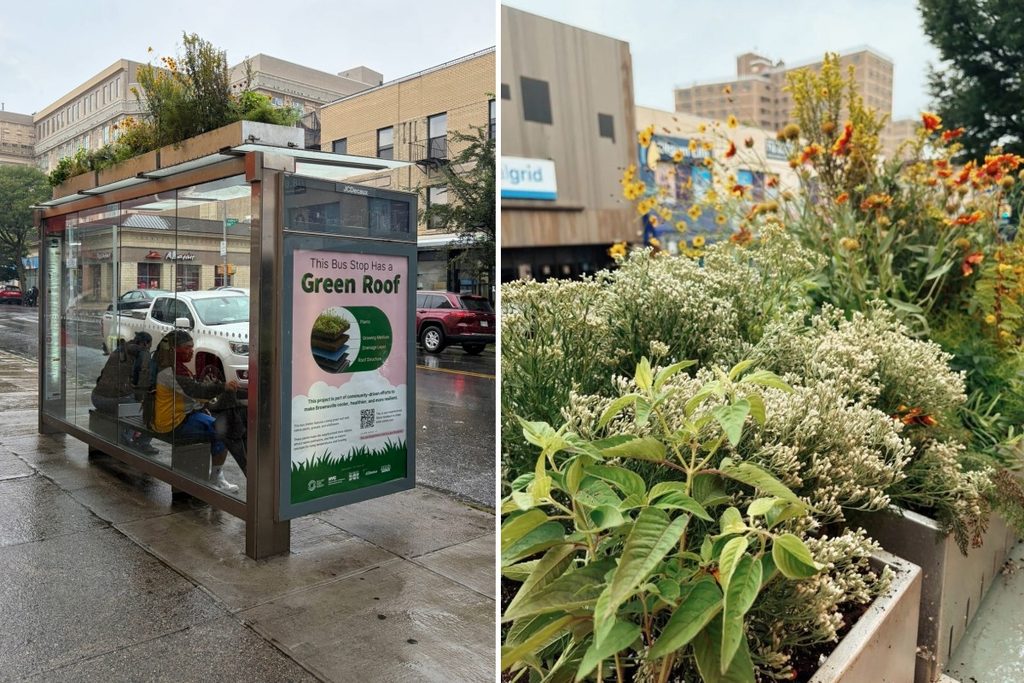
Featuring native plants, grasses, and wildflowers, the green roof is designed to help reduce heat, capture stormwater, increase urban greenery, and support native pollinators. The pilot also delivers on a commitment outlined in Next Stop: Fast Buses, Better Service, Mayor Mamdani and Governor Hochul’s plan to improve New York City’s bus system.
As one of New York City’s most heat-vulnerable neighborhoods, Brownsville faces significant challenges associated with rising temperatures and heavy rainfall. These challenges affect not only residents and commuters but also the small businesses that depend on safe, accessible, and vibrant commercial corridors.
By testing relatively small-scale interventions within existing public infrastructure, the pilot offers an opportunity to understand how targeted investments can improve everyday experiences while building long-term climate resilience. Lessons from the installations could help inform future bus shelter and streetscape improvements across the five boroughs.
Building on community-driven climate resilience in Brownsville
The pilot builds on RCC’s broader work through our Small Business Climate Resilience Program, where we have been working alongside residents, small businesses, and community and City partners to accelerate locally driven solutions that help Brownsville prepare for extreme heat and flooding.
Earlier this year, News 12 Brooklyn highlighted this work, exploring how interventions such as tree planting, tree guard benches, mobile shade stations, and flood-ready community spaces could help strengthen the Pitkin Avenue commercial corridor.
Together, these efforts demonstrate how climate adaptation, small business resilience, public space improvements, and community engagement can reinforce one another. They also underscore the importance of moving climate resilience strategies beyond planning and into tangible projects that communities can directly experience and benefit from.
We look forward to learning from this pilot, building on the momentum with our partners, and continuing to advance locally driven climate solutions in New York City and beyond.
In the news
News 12 Brooklyn — Non-Profit Rolls Out Unique Climate-Resilient Pilot in Brownsville (February 26, 2026)
NYC Mayor’s Office — Mayor Mamdani Announces New York City’s First Bus Shelter With a Cooling Green Roof in Brownsville (September 16, 2026)